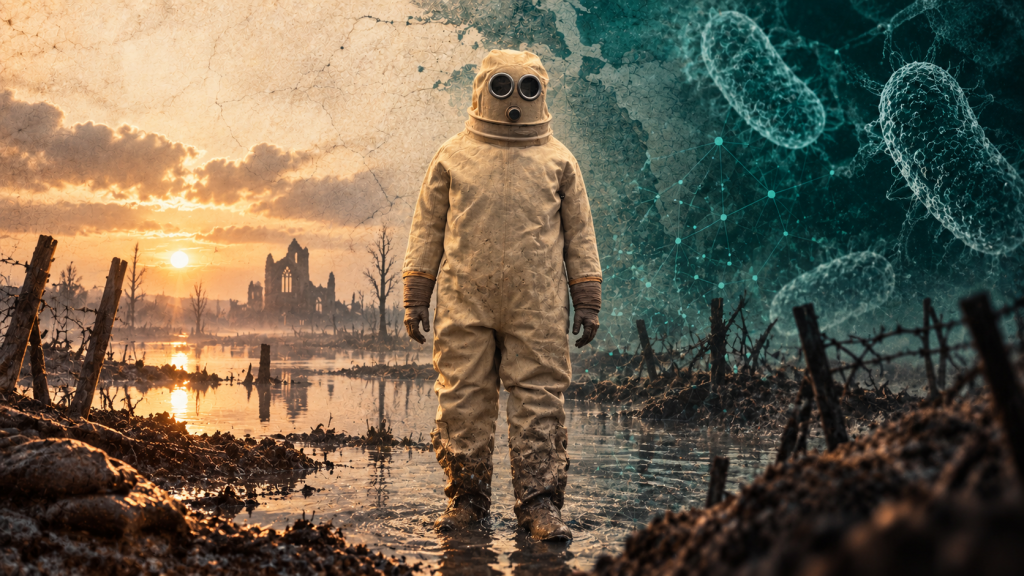
Noviota, part of the JDGS Holdings group, has launched Ancient Epidemics, a new independent publishing project exploring how infectious disease has shaped human societies — and what the experience of the past can still teach us today.
History, archaeology and molecular science together
Ancient Epidemics brings together history, archaeology, palaeopathology, ancient DNA and the history of medicine to tell the stories behind epidemics across different periods and cultures. Its scope extends beyond individual pathogens or famous pandemics to the people and societies that experienced them: how communities understood disease, the measures they used to contain it, the institutions that emerged in response and the cultural traces epidemics left behind.
Storytelling, not a journal
The project has deliberately been designed as historical storytelling rather than an academic journal. Articles will be carefully researched and referenced, but written for readers who are curious about the subject without requiring specialist knowledge. Themes will range from the diseases of the ancient world and major epidemics through history to quarantine, public-health responses, medical beliefs and the connections between historical experience and contemporary infectious-disease challenges.
The opening work includes an exploration of the familiar figure of the plague doctor, separating the history of the distinctive beaked costume from the mythology that subsequently developed around it. Future articles will range much more widely across time and geography.
A connection to The BioChain
Ancient Epidemics also has an interesting connection with another Noviota project, The BioChain. Advances in ancient DNA and palaeogenomics are increasingly allowing researchers to detect pathogens in human and animal remains and reconstruct aspects of disease history that written sources alone cannot reveal. That creates an opportunity for historical evidence, archaeological context and molecular evidence to begin informing one another in entirely new ways.
Ancient Epidemics will remain editorially distinct from The BioChain and its research demonstrators. Its purpose is simpler: to explore the long relationship between disease and society, tell those stories well, and retain enough curiosity to follow them wherever the evidence leads.
Questions & Answers
What is Ancient Epidemics?
An independent publishing project from Noviota, part of the JDGS Holdings group, exploring how infectious disease has shaped human societies, combining history, archaeology, palaeopathology, ancient DNA and the history of medicine.
Is it an academic journal?
No. It is designed as carefully researched and referenced historical storytelling for curious general readers, not a specialist academic publication.
What does the opening work cover?
An exploration of the plague doctor — separating the real history of the distinctive beaked costume from the mythology that developed around it.
How does it relate to The BioChain?
Both are Noviota projects, and advances in ancient DNA increasingly let researchers detect pathogens in historical remains — creating opportunities for historical, archaeological and molecular evidence to inform one another. The two projects remain editorially distinct.