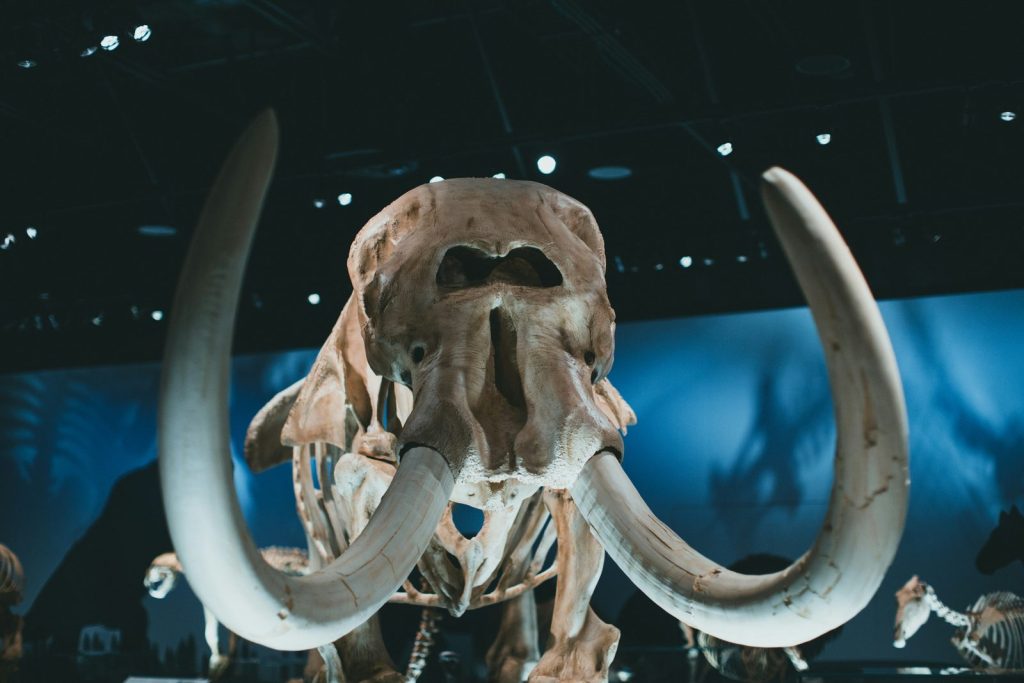
Molecular Precision is developing Deep Time Biology, a project connecting prehistoric animals with computational biology, reproducible scientific analysis and structured biological information.
Beginning with woolly mammoths and woolly rhinoceroses, the project will use published genomic data to explore focused questions about adaptation, evolutionary relationships and population history. It will also examine how biological components and their supporting evidence can be represented using the Synthetic Biology Open Language, SBOL3.
For JDGS, the initiative illustrates how specialist technical capabilities can be developed through engaging scientific questions, producing resources that support research, education and the demonstration of practical methods.
From prehistoric animals to molecular questions
Ancient animals offer a compelling introduction to complex biology. Questions about how a mammoth survived in cold environments can lead into investigations of genetic variation, protein function and the evidence connecting molecular changes to physical characteristics.
Deep Time Biology will follow those connections carefully. Each investigation will begin with a defined question and an assessment of suitable published data, and planned outputs include documented computational workflows, visual explanations and accounts of what the results can — and cannot — establish.
The initial work will focus on reanalysis and interpretation of existing research, with published experimental findings, computational predictions and Molecular Precision’s own analytical observations clearly distinguished.
Applying Molecular Precision’s expertise
The project extends Molecular Precision’s work on biological representation, technical traceability and reproducible scientific computing. An investigation may bring together sequence datasets, reference assemblies, analytical outputs, functional annotations and published findings, and keeping those sources connected makes it easier to understand how an interpretation was reached and to assess its supporting evidence.
SBOL3 will be explored as a way to represent selected biological components and their relationships, with linked provenance and evidence where appropriate, while genomic comparisons and statistical analyses will use tools suited to those tasks. The aim is to develop examples that can be inspected, queried and reused, demonstrating the value of structured information alongside scientific analysis.
Part of a wider interest in the deep past
Ancient DNA and the history of life are a recurring thread across the group. The Ancient BioChain applies The BioChain’s architecture to public ancient DNA research data, in the open, showing how data integrity, verification and provenance behave in practice. Ancient Epidemics explores how past societies understood, managed and survived disease, and what that history offers modern One Health thinking.
Deep Time Biology adds a third perspective: the molecular evidence itself, examined through reproducible computational analysis and structured representation.
Connecting research with practical learning
Deep Time Biology will also contribute to Molecular Precision Learning. Selected parts of the investigations will become practical tutorials covering activities such as comparing biological sequences, interpreting annotations, recording data provenance and creating structured representations with pySBOL3.
This approach connects an accessible scientific story with the methods used to investigate it, so that readers can explore the animals and their biology, then follow selected computational steps in greater detail.
The project is also intended to connect with Wild Ancestors, a broader writing and exploration initiative covering prehistoric animals and evolutionary history. Wild Ancestors will provide space for the wider stories, while Molecular Precision will host the technical investigations and learning resources.
Building the first investigation
Deep Time Biology is currently in development. The first investigation will be selected according to data availability, scientific relevance and the feasibility of producing a useful, reproducible analysis, and the longer-term ambition is a growing collection of connected case studies and educational resources, grounded in transparent methods and clearly documented evidence.
Explore Deep Time Biology on Molecular Precision →
Questions & Answers
What is Deep Time Biology?
A developing Molecular Precision research and learning project that uses published genomic data to explore woolly mammoths and woolly rhinoceroses — their adaptation, evolutionary relationships and population history — through reproducible computational analysis and structured biological representation with SBOL3.
Has the project produced results yet?
Not yet. Deep Time Biology is in development, and the first investigation will be selected according to data availability, scientific relevance and the feasibility of a useful, reproducible analysis. The initial work will reanalyse and interpret existing published research.
How does it relate to The Ancient BioChain and Ancient Epidemics?
All three look at the deep past from different angles. The Ancient BioChain demonstrates provenance and verification on public ancient DNA data, Ancient Epidemics explores the history of disease for modern One Health, and Deep Time Biology examines the molecular evidence of prehistoric animals.
Where does Molecular Precision sit in the group?
Molecular Precision is part of Noviota Limited, the life-science portfolio of JDGS Holdings. It launched its website in July 2026.
Related: The Ancient BioChain Is Now Live · Ancient Epidemics Launches as a New Home for the History of Disease